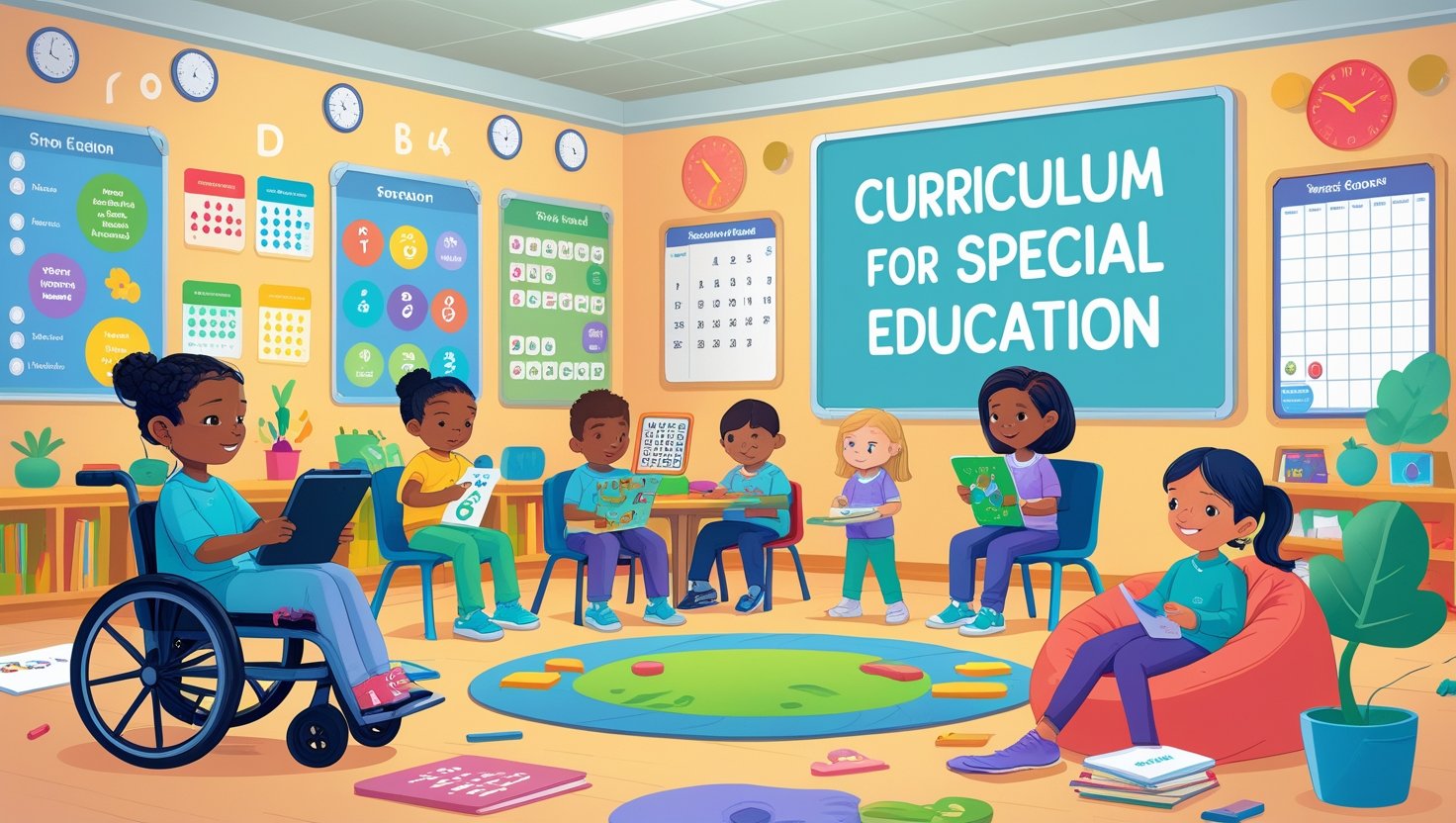
Curriculum development is an important process that is the foundation of any educational system. This process decides what should be taught to the students, in what manner it should be taught, and for what purpose. In today’s era, when education is evolving rapidly, it has become very important to create an effective curriculum so that students can be prepared not only for theory but also for practical life. Curriculum is not just a collection of subjects, rather, it is a planned journey that develops skills, knowledge, and attitudes of the students.
There are many steps in this process like setting goals, understanding the needs of the learners, designing the content, implementing it and revising it with time. Every step has its own role which decides the overall effectiveness of the curriculum. If the curriculum is prepared keeping in mind the needs of the students, demands of the time and teaching methods, then it becomes more engaging, relevant and useful. In this blog, we will explore all the steps of curriculum development easily and understandably.
Identifying Educational Goals and Learning Outcomes:
The first and most important step while developing a curriculum is to identify educational goals and learning outcomes. Educational goals mean the direction in which we want to take students. These goals are broader, such as developing critical thinking, improving communication skills, or providing a basic understanding of a field. On the other hand, learning outcomes are the specific results a student achieves after studying a topic or subject, such as “a student can solve a math problem independently” or “a student can explain a scientific method”. Defining these goals and outcomes is one way to prepare for the curriculum.
In this process, teachers, experts, and stakeholders together decide what to expect from students at each grade level. It is also important to make these goals SMART (Specific, Measurable, Achievable, Relevant, Time-bound) so that their evaluation can be done easily. Learning outcomes are the backbone of curriculum design, and assessment tools are also prepared on their basis. If these goals are clear, students’ learning is directed, and teachers can also adopt effective strategies. Ultimately, it will not be wrong to say that without strong educational goals, developing an effective curriculum is not only difficult but impossible.
Conducting Needs Assessment:
Needs assessment means that before preparing a curriculum, it should be understood what the real needs of the learners, society, and the job market. Every area, age group, or profession has different needs, and if the curriculum does not match these needs, it is not relevant for the students. Needs assessment helps educators to know what skills the students need, which topics are meaningful for them, and what type of knowledge can help them in the future.
This process is done through surveys, interviews, tests, or community feedback. The opinions of teachers, students, parents, and industry experts are all considered. For example, if people in a technical school want to take a course in mechanical engineering, then the curriculum will have to be made according to the latest tools, technology, and techniques of this field. Curriculum prepared without a needs assessment can become outdated, which not only wastes the time of the students but also hinders their career development. Therefore, this step is an integral part of curriculum development. Learning becomes more effective and purposeful when the curriculum fulfils the actual needs of the learners.
Designing Curriculum Content and Structure
Designing the content and structure of a curriculum is a creative and strategic process. Once goals and needs are identified, the next step is to develop content to achieve those goals. This involves deciding what topics students will be taught, their sequence, and the depth level of each topic. It is important to arrange the content in a logical order so that learning takes place step by step and students can easily understand the concepts.
This step also involves deciding how to incorporate practical activities, case studies, group discussions, or digital resources along with the theoretical content. The curriculum structure determines the time taken to complete each unit, how assessments will be given, and at what level learning will be evaluated. A good curriculum is one that is engaging, age-appropriate, and provides interdisciplinary links. Teachers should also be given flexibility so that they can adjust the content according to students’ needs.
If the content is interesting, relevant, and well-structured, the learning experience of students improves significantly. They do not just learn by rote but start understanding the concepts deeply. This way, their performance also improves, and they are prepared to handle real-world situations.
Implementing and Delivering the Curriculum
After preparing the curriculum, the most important phase is to implement it, i.e. to apply it in practical life. At this stage, schools, colleges and institutes introduce the curriculum in their classrooms. But just having the curriculum is not enough, delivering it in an effective manner is also equally important. For this, teachers are trained, they are provided with teaching aids and resources so that they can adopt the new curriculum easily.
During delivery, the focus is on understanding and engagement of students. Apart from traditional lectures, teachers use interactive methods like group activities, digital tools and real-world simulations. Due to this, students do not just listen but actively participate which makes their learning more effective. The school administration also plays a role in curriculum implementation as it ensures that all the facilities and support are timely and appropriate.
If the curriculum is not delivered properly, it will not have the desired impact no matter how well it is designed. Hence, teachers’ readiness, students’ feedback and classroom environment all together ensure successful implementation. Effective implementation is that bridge which transforms planning into learning outcomes.
Evaluating and Revising the Curriculum:
The last but most crucial step in curriculum development is evaluation and revision. Every curriculum needs to be evaluated at some point to see if it is achieving its goals. The evaluation process begins with feedback collection in which teachers, students, and sometimes parents share their opinions. This determines which topics are effective, which areas are experiencing difficulties, and what changes are needed.
Evaluation can be qualitative as well as quantitative. Analysis is done by measuring tests, assignments, performance tasks and student engagement. If a curriculum is based on outdated concepts or does not match the learning levels of students, it becomes necessary to revise it. Revision means that new tools, updated information and fresh approaches are incorporated in the curriculum.
An evolving education system always requires the curriculum to be aligned with the demands of the new times. Such a dynamic curriculum provides relevant and valuable education to students. The regular process of evaluation and revision makes the curriculum strong, effective, and purposeful, which is beneficial for every learner.
Conclusion:
Curriculum development is a process that never ends. It is a continuous journey in which the curriculum is improved by considering new ideas, feedback, and requirements every time. In today’s era, when science, technology, and social systems are changing rapidly, a static curriculum is of no use. Therefore, educators, policy makers, and subject experts have to meet and review the curriculum every few years and revise it so that it remains relevant and up-to-date all the time.
A good curriculum is not limited to theory but also enables students to find solutions to real-world problems. When goals are clearly defined, needs assessment is done properly, content is well-structured, implementation is effective, and regular evaluation is taking place, then the curriculum achieves its real objective. Every stage is very important in its place, and the deficiency of any one stage affects the whole system.
Therefore, curriculum development should be considered as a team effort in which input of every branch matters. Only then can we create such a disciplined system that makes the future of students bright and teaches them not just degrees but also the art of living life. The stronger this process is, the better quality education can be delivered.
FAQs:
- What is curriculum development, and why is it important?
Curriculum development is the systematic process of planning, designing, implementing, and evaluating educational content and learning experiences. It is crucial because it determines what students learn, how they learn it, and how well it prepares them for both academic success and real-life situations. A strong curriculum lays the foundation for effective education and lifelong learning. - What are the main steps involved in curriculum development?
The main steps include:
Identifying educational goals and learning outcomes
Conducting a needs assessment
Designing curriculum content and structure
Implementing and delivering the curriculum
Evaluating and revising the curriculum
Each of these steps plays a vital role in making the curriculum relevant, effective, and adaptable to changing educational needs. - How do learning outcomes differ from educational goals?
Educational goals are broad aims like developing critical thinking or communication skills, while learning outcomes are specific, measurable skills or knowledge that students should acquire by the end of a lesson or course. For example, a goal might be “understanding science,” while a learning outcome would be “explaining the water cycle.” - Why is needs assessment necessary in curriculum development?
Needs assessment ensures the curriculum aligns with the real-world needs of students, society, and the job market. By identifying skill gaps and future opportunities, educators can design content that is relevant and meaningful. Without this step, the curriculum may become outdated or disconnected from practical requirements. - How is a curriculum evaluated and updated over time?
Evaluation is done through feedback from students, teachers, and sometimes parents, as well as through performance analysis like test scores and class participation. Based on the findings, the curriculum is revised to include updated knowledge, improved methods, and modern tools. This keeps the curriculum dynamic and ensures it remains effective and relevant.